
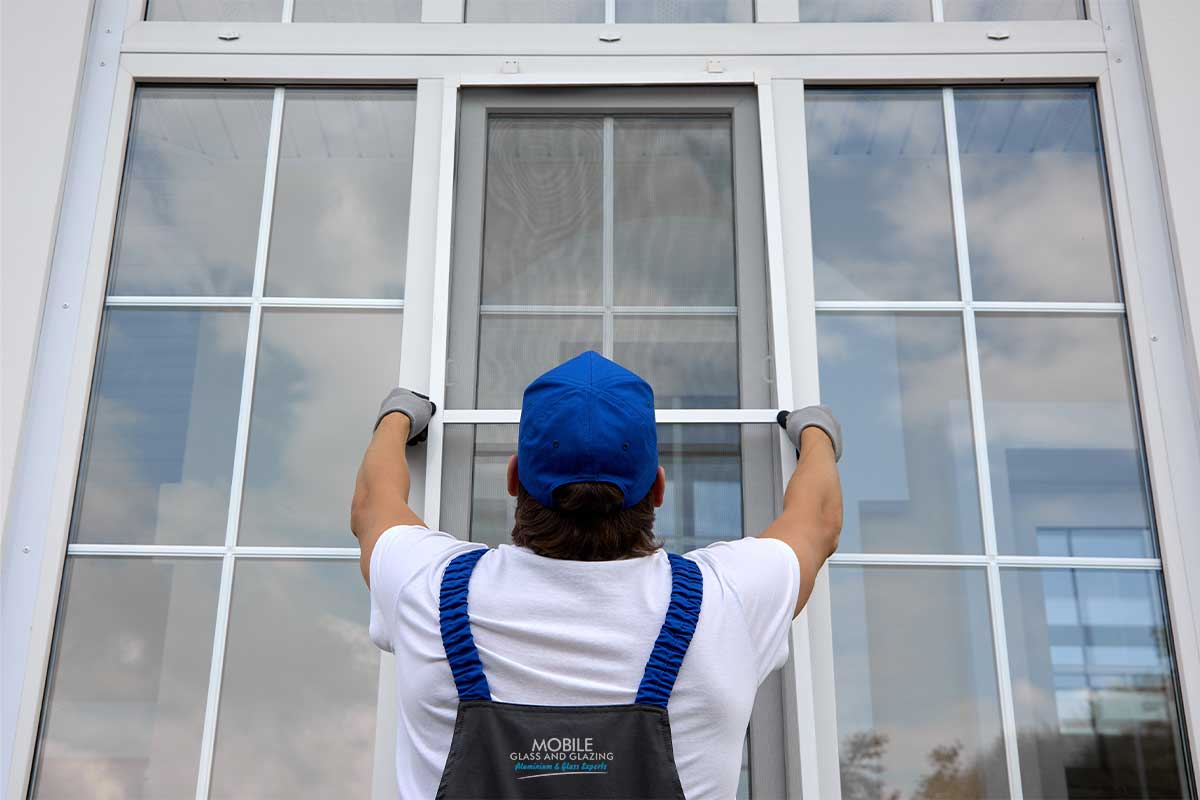
Build practical capability in glass and glazing.
The Certificate III in Glass and Glazing is designed for people seeking practical skills for a career in the glass and glazing industry.
The national qualification reflects work manufacturing, processing, moving or installing glass products. Roles may sit in glass processing, glazing or designed glazing across residential and commercial operations.
Students gain experience with relevant tools, equipment and techniques under the guidance of experienced trainers and assessors, developing the judgement to adapt their skills to different jobs.
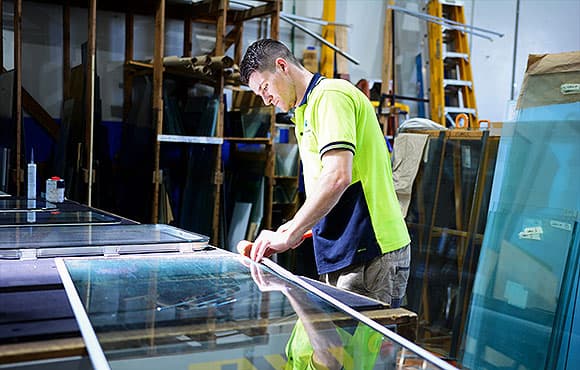
From technical knowledge to practical application.
Glass handling and processing
Measure, cut, process and move glass using methods that protect the product, the worker and people nearby.
Installation and glazing
Develop installation capability for relevant residential and commercial products according to the selected elective and specialisation package.
Technical workplace practice
Apply calculations, first aid, communication, teamwork and sustainable practices while adapting familiar methods to different job requirements.
Training built around the work.
Apply knowledge through industry-relevant tasks.
TSC's course information describes practical, industry-relevant training supported by experienced trainers and assessors. Knowledge and practical competence must be demonstrated for each delivered unit.
- Measure, mark, cut and process glass using appropriate equipment
- Move and handle glass with attention to risk, weight and breakage
- Complete glazing and glass-processing tasks from TSC's delivered unit schedule
- Apply first aid, communication, teamwork and sustainable workplace practices
The schedule currently supplied by TSC.
The supplied TSC training strategy allocates 960 scheduled course hours across 48 training weeks, plus 4 weeks of scheduled term breaks, for a total duration of 52 weeks.
Training and assessment
Coursework combines trainer-led technical learning with practical skill development. Assessment evidence is gathered against the requirements of each unit. TSC provides the current timetable, assessment plan and any practical-location details during the admission and orientation process.
Units in TSC's supplied delivery schedule.
The hours and teaching weeks below come directly from TSC's detailed course schedule. Unit order and calendar dates may be adjusted for a future intake without changing the qualification requirements.
The supplied spreadsheet lists 22 units, while the current national packaging requires 23. For MSF30422, the required core unit HLTAID011 Provide First Aid is not included in the supplied schedule. TSC should confirm the corrected unit timing and total hours.
| Code | Unit title | Hours | Weeks |
|---|---|---|---|
| CPCWHS1001 | Prepare to work safely in the construction industry | 20 | 1 |
| CPCCWHS2001 | Apply WHS requirements, policies and procedures in the construction industry | 20 | 1 |
| MSMSUP102 | Communicate in the workplace | 20 | 1 |
| MSMSUP106 | Work in a team | 40 | 2 |
| MSMENV272 | Participate in environmentally sustainable work practices | 40 | 2 |
| MSFGN2001 | Make measurements and calculations | 40 | 2 |
| MSFGN3005 | Read and interpret work documents | 40 | 2 |
| CPCCCM2006 | Apply basic levelling procedures | 20 | 1 |
| MSFGG3039 | Manually move glass | 20 | 1 |
| MSFGG2014 | Cut thin glass by hand | 60 | 3 |
| MSFFM3024 | Construct jigs and fixtures | 40 | 2 |
| MSFGG2015 | Process glass by basic machines | 60 | 3 |
| MSFGG3023 | Apply and handle films | 60 | 3 |
| MSFGG3025 | Apply patterns and designs to glass | 40 | 2 |
| BSBWHS411 | Implement and monitor WHS policies, procedures and programs to meet legislative requirements | 40 | 2 |
| MSFGG3026 | Laminate glass | 60 | 3 |
| MSFGG3031 | Cut thick glass | 100 | 5 |
| MSFFM3030 | Produce manual and computer-aided production drawings | 60 | 3 |
| MSFGG3027 | Toughen glass | 80 | 4 |
| MSFGN3006 | Estimate and cost job | 20 | 1 |
| CPCCCM2012 | Work safely at heights | 20 | 1 |
| MSFGG3034 | Install residential windows and doors | 60 | 3 |
| Training total | 960 | 48 | |
Know the requirements around the qualification.
National packaging can support Glass Processing, Glazing or Designed Glazing specialisations; the award depends on the electives completed.
TSC's supplied schedule covers processing, films, lamination, toughening, production drawings and residential window and door installation.
Glazing licensing applies in Queensland, New South Wales and South Australia, while other worksite or unit-specific rules may apply elsewhere.
Admission is based on the TSC course booklet.
Applicants must satisfy TSC's provider entry criteria even where the national qualification itself lists no formal entry requirements.
Accepted English alternatives include five years of education in an English-speaking country, at least six months of a Certificate IV course at an Australian RTO, a successful English Placement Test, or equivalent PTE/TOEFL results. For Certificate III courses, the booklet also lists CPCCWHS1001 under its academic requirement.
Read every entry requirementWhere this qualification can lead.
Completion can support students to pursue relevant employment and continue developing through supervised workplace experience, specialist skills or further study. A qualification does not by itself guarantee employment, licensing or registration.
- Glazier or glass-processing worker roles
- Residential and commercial glazing operations
- Designed glazing or specialist processing where the relevant elective package is completed
Bring existing experience into the conversation.
Course credit, Credit Transfer and RPL
Students may ask TSC about Credit Transfer for equivalent completed units or Recognition of Prior Learning (RPL) based on relevant skills and experience. Evidence and assessment requirements apply, and the outcome can affect the individual training plan.
Equipment, materials and learning resources
The published material fee is listed on this page. Before enrolment, ask TSC for the current list of required personal equipment, protective clothing, technology and any items supplied by the college.